

- Posted on December 5th, 2025
Culture at COP30: Creating the World We Long For

It’s been two weeks since COP30 concluded in Belém with the Global Mutirão aspiration to unite humanity in a global mobilisation against climate change. If you followed the talks or read any of the post-COP summaries, you’d be forgiven for raising an eyebrow. But whilst countries are clearly not all united or mobilised, there was real progress. Over the last fortnight we’ve been reflecting on the glimmers – and occasional full beams – of hope we experienced during our time in Brazil.
COP30 policy outcomes

There was, of course, disappointment at the failure of Parties to agree on a transition away from fossil fuels, which was Brazilian President Lula’s key aim for the talks. The absence of any reference to fossil fuels in the final text was triggering even for the most battle-weary COP veterans. But given the shifting geopolitics of climate policy, the obstructive non-cooperation of the USA, the strength of petro-state politics and fossil fuel companies, and the limitations of UN decision-making baked into its governance, it was always going to be a stretch.
Instead, a group of 24 countries, led by Colombia and the Netherlands and including Mexico, Pacific Island nations and the UK, identified some red lines, and have come together to chart legal, economic, and social pathways for the phasing out of fossil fuels. Lula has also taken the issue to the G20 to push for a phase out as soon as possible. This includes his own country: Brazil produced over 4 million barrels of oil per day in October and is the 9th largest producer globally.
But there was measurable progress on adaptation, which has historically been the poor sibling of mitigation. Negotiators agreed on an initial set of 59 indicators for the Global Goal on Adaptation (GGA), which will be a major theme of the COP intermediate talks in Bonn (June 2026). As many have noted, countries will need proper access to finance to deliver meaningful and effective adaptation measures. Agreement to triple adaptation finance, and some progress on international efforts to halt deforestation (though not what many had hoped for) were also outcomes. And a major win was the adoption of the Belém Action Mechanism (BAM) for a Just Transition, a heart-warming result of years of advocacy from environmental and climate justice networks (notably Climate Action Network), women and gender, youth and Indigenous peoples’ organisations and international trade union movements.
After three years of COP summits with barely any dissenting and campaigning voices outside the Blue Zone, the protesting voices of Indigenous groups at every stage and in every space in Belém was inspirational. Hailed as the Amazonian COP, with a commitment to indigenous rights from the Presidency, the activism of indigenous people was testament to the courage of these communities, and a reminder of the existential threats they are experiencing right now.
Culture

But most significant for us was the huge presence of culture in Belém. No longer confined to performance spaces or in fringe gatherings, it was in COP corridors and Belém streets, night clubs and negotiating rooms, quaysides and car parks. It made Glasgow, the last exuberant expression of creative dissent, look tame. Culture is now understood as relevant to climate action, and this is progress. COP30 had a designated Culture Day, Article 19 of the Action Agenda, many formal and informal creative and cultural events, experiences and activities.
JB’s main goal was to land the We Make Tomorrow (WMT) campaign, asking for culture to be explicitly mentioned in the final outcome text (see our previous COP blog and Ninja Media’s articles here, and here). That didn’t happen, but important advances were made elsewhere, especially for heritage. Of the 60 or so initial indicators proposed for the Global Goal on Adaptation, five are directly related to heritage. Our good friends at Heritage Adapts to Climate Alliance (HACA) have done some extraordinary work to make all this happen.
The Presidency’s Action Agenda also now offers a more stable home for culture in the UNFCCC process, at least for now, with thanks to ECCA, the Group of Friends for Culture-based Climate Action and UNESCO.
Although the magic word was absent in the outcome text, We Make Tomorrow gathered a lot of momentum. It was celebrated at the Entertainment and Culture Pavilion on the first Culture Day (12th November). By the end of COP30, the campaign represented an incredible 1.5 million voices, 30 Champions and 4 Global Ambassadors: HRH Princess Dana of Jordan, COP30 Youth Climate Champion Marcele Oliviera, artist Tomas Saraceno and musician, and poet and cultural icon Baaba Maal. Speakers at the launch included artists Helena Ramos and Alice Audouin, Vinícius Gürtler da Rosa (Brazilian Ministry of Culture), Farhana Yamin, Thiago Jesus and Gunjan Nandra (our WMT Coordinator). There was a warm Carimbó welcome from Claudete do Tijupá, a maestro in the art form, who stayed all day, dancing through the sterile corridors, malls and stairwells of the Blue Zone. In one memorable moment, she and Tainá Marajoara, cook, cultural producer and curator with the best restaurant at COP, on seeing one another, danced, sang and spoke about indigenous food sovereignty and culture to hungry negotiators, and then went back to work. Both Claudete and Tainá had been part of JB’s Creative Climate convening in Belém last February, and embodied the essence of creative climate leadership there and then.
We also launched our Postcards to the Future, in collaboration with Letters to the Earth and DearTomorrow at the Entertainment + Culture Pavilion, inviting delegates to share their visions of the year 2050.

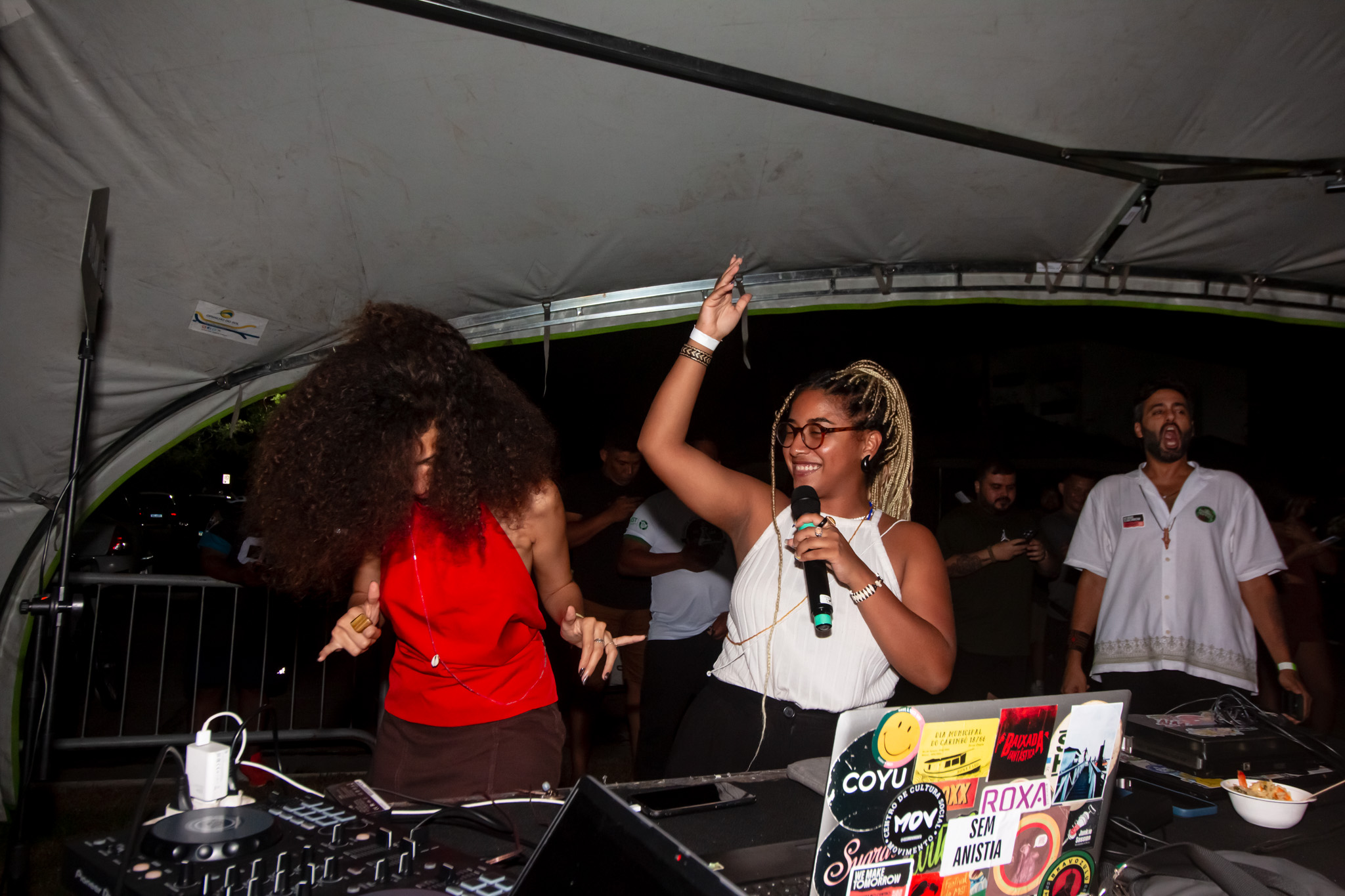
Next up for WMT was Beats for the Planet, an intergenerational evening on the theme of WMT carried out with our inspirational partners Earth Alliance, WMT, Greenpeace Brasil, Instituto Ayíka Entertainment + Culture Pavilion, People’s Palace Projects, Coalizão O Clima é de Mudança and the COP Youth Champion Marcele Oliviera and her PYCC team. A parade by the queens of Rainha das Matas, an incredible set from DJ Lil Pavan and a brilliant hip hop battle with local and Amazonian youth, was staged in front of the Rainbow Warrior, anchored on the Belém waterside after its journey down the Amazon a few days earlier.
And finally, WMT was presented to the COP Presidency on the penultimate day of the talks, at an event with our now-firm friends leading the Global Mutirão: Maria Augusta Arruda, Lenon Madeiros and Tulio Andrade. Maria and Tulio hosted London Climate Week’s Cultural Mutirão at the Globe Theatre in June which really encouraged the WMT team. The event was a little upstaged by a fire, which happened to break out at the same time – more on that below. You can read a progress report on the campaign here, with thanks to Rosie Guyer!
Our deep gratitude to all who signed, supported, resourced, shared, nourished and campaigned to put culture at the heart of climate action, helping to create the world we long for.
Beyond WMT, thanks also to the British Council for awarding JB, along with friends and collaborators at People’s Palace Projects a Creative Commission grant, for three original projects at COP:
- Lucas Ururahy, a Rio based visual artist.
- Rainha das Matas (Queens of the Woods), an artistic collective from Soure/Ilha do Marajó in Pará, which unites sustainability, Marajoara culture and LGBTQIA+ protagonism in art and resistance actions.
- Ziel Karapotó and Olinda Tupinambá, Indigenous artists who combine ancestral knowledge with contemporary expressions.
Ziel Karapotó and Olinda Tupinambá did a breath-taking opening performance for the Cultura Clima Summit in Rio, and Rainhas das Matas made national news with their spectacular contribution to the climate march. You can read more about the artists (below) and their work here.
COP30 was the last in a series of events that started much sooner (more on this and what it means after the new year). For now, some of the brightest beams are shining on:
- The second International Seminar on Culture and Climate in Rio hosted by the Brazilian Ministry of Culture. Before it kicked off, we ran a short Creative Climate convening with inspirational artists and cultural leaders from the city. The main Culture and Climate Seminar which began with a breathtaking performance by Ziel Karapotó and Olinda Tupinambá (see above) was a rich arc of panels, talks and performances – too many highlights to mention here – but special moments included Dr Vanessa Andreotti, Indigenous leader Ailton Krenak, Kumi Naidoo, Minister Margareth Menezes, Naine Terena, Thaynah Gutierrez, and a final riotous performance by Shingai.
- Many of the attendees in Rio then joined the second, Global Artivism seminar in Salvador, led by an extraordinary team of Kumi Naidoo, Louisa Zondo, Favianna Rodrigues and many others. This transformational Global South and global majority-led convening gathered a thousand artivists from across cultures and generations for three incredible days, exploring how artivism aligns to social and environmental challenges, power dynamics and systems shifts. CCL alumni joined, along with old friends and partners: big thanks to Julia Matamoros (Canada), one of the incredible Global Artivism coordinators, and Guy Ritani, Jen Rae (Australia) and Alison and Thiago Jesus. Also friends from The Community Arts Network, E&C, Somewhere Places, Ashoka and hello Ross Patel! See you in London. The atmosphere was carnival meets crisis, meeting today’s struggles with joy and connection. Many of us went straight to Belém and COP bolstered by the energy, community and inspiration of time spent together in Salvador.
- JB was invited to speak at an event at the UK Pavilion, alongside the Minister for Climate Katie White, about culture’s role in climate action.
- An official UNFCCC event under the auspices of UNFCCC Entertainment and Culture for Climate Action celebrated the Arts Charter for Climate Action as a catalyst for resilience, hosted by JB, Alexandra Halpern from the UN, and our multi-talented friend and co-collaborator Lucimara Letelier, with Heath Lowndes from Galleries Climate Coalition, and a performance by Moara Tupinambá, an Indigenous artist, researcher, and activist.
- Ursula Vidal, the Secretary of Culture for Belém, launched the second edition of the Amazon Culture, Sustainability and Climate Change Guide, a collaboration with JB and the Secretariat that has offered JB an opportunity to work closely with the artists, artivists, and indigenous knowledge holders of the region. The second edition, launched in the Blue and the Green Zones with Ursula and Alison, is full of wisdom and examples of culture-based climate solutions. Thanks to Tenaya, Graciela and Taghrid at JB, and Ursula Vidal, Daniel Araújo and all the artists, organisations and communities that give so generously to this work every day. This is a fantastic deep dive into the work.
- Finally we attended some of the Action Agenda culture sessions, with more on that to follow.
Despite the joy and momentum around culture at this COP, there were some difficult moments too, not least the fire caused by an electrical fault that forced delegates to evacuate the venue. Thankfully no-one was injured, although the Entertainment and Culture pavilion, where much of the WMT campaign team was based, was largely destroyed. Sam, Gunjan, Kat, Daniel, Leia and everyone who put so much hard work, thought and love into the pavilion issued a press statement which is testament to their resilience and grit. Whilst flash floods earlier in the week (which could have completely derailed Beats for the Planet had there not been the commitment to the event from the PYCC and Rainbow Warrior teams and performers) were an ominous reminder of the impact of the climate crisis, the response to the fire – rapid and refusing to disrupt the negotiations longer than necessary – emphasised how resilient we can be in the face of unpredictability and how quickly communities can mobilise to rebuild.
The question now is how to turn all this momentum into meaningful action and support for culture and the arts. Policymakers and leaders are more aware of the need to include culture in national climate action, but this will need to be implemented with the necessary funding and policy measures. As we look towards a New Year, JB will be central to carrying this work forward and making sure that the spirit of the Mutirão is realised.
Warm thanks to all our friends and co collaborators for the countless gifts: of conversations, wisdom, time, presence, calm, solidarity and creativity. This includes all the Champions of We Make Tomorrow who posted, persuaded and promoted our shared goal, the Ambassadors and to the JB team, the E&C team, Isadora Canela, Alice Audouin, Lucimara Letelier, Princess Dana Firas of Jordan, Jen Rae, Andrew Potts, Vinícius Gürtler da Rosa, Carlos Paiva, Zamzam Ibrahim, Helena Ramos, Margareth Menezes, Heath Lowndes, Yula Rocha, Climate Heritage Network, Eduardo Cavalho, Ninja Media, Marcele Oliviera and her incredible PYYC team, Thiago Jesus & People’s Palace Projects, Moara Tupinambá, Greenpeace Brasil, Instituto Ayíka Entertainment + Culture Pavilion, Maria Augusta Arruda, Earth Alliance, Coalizão O Clima é de Mudança, Farhana Yamin, Gunjan Nandra, Sam Ruben, Kat Buckland, Leia Booth, Claudete do Tijupá, Tainá Marajoara, Lucas Ururahy, Ross Patel, Guy Ritani, Monomita Nag-Chaudhury, Rainha das Matas, Ziel Karapotó and Olinda Tupinambá, Shingai, Alicia Tauro, Moussa Elimane Sall, Yazmany Arboleda, Greg Cochrane, Ruth Daniel, Kumi Naidoo, Favianna Rodriguez, Kevin Buckland, Eduardo Gouveira Jr, Marda Kirn, Jo Little, Ashoka family, Alexandra Pilavachi, Simon Stumf, Thimali Kodikara, Julia Matamoras, Ruby Kvalheim, Sarah Leech, Rosie Guyer, Edwina MacEachran, Daniel Cervenka, Paul Griffiths and all the many other people who I, in haste, have not included yet.
And sincere thanks to the Paul Hamlyn Foundation, Porticus, Earth Alliance and British Council who made this whole campaign possible.
Photo credits: Header image – HRH Princess Dana at COP, photo by Elizabeth Carpio; // Speakers at COP, photo by Elizabeth Carpio; // Rainha das Matas, photo by Ana Paula Gomes; // Postcards to the Future, photo by Farhath Siddiqui;// Beats for the Planet, photo by Ana Paula Gomes.